When we talk about sexuality, we often think of norms: how we're "supposed" to love, desire, or behave. But for neurodivergent people — autistic, ADHD, dyslexic, highly sensitive, and many others — these codes are sometimes unclear, absurd… or simply inadequate.
What if neurodiversity, far from being an obstacle, actually opened the door to different ways of loving and being loved? Recent research on sexuality and neurodivergence invites us to reconsider our stereotypes — and does so with a kindness that feels refreshing.
When the brain steps outside the boxes, so does the heart
Studies confirm it: neurodivergent people display greater diversity in sexual orientations and gender identities than the average population. Many identify as bisexual, pansexual, or non-binary (Figueiredo et al., 2024).
Why? Perhaps because when you've always lived "outside the norm," you learn earlier to question norms themselves. Perhaps also because neurodivergence changes how we perceive the world: more directly, more intensely, more sincerely.
And sometimes, this gives rise to hybrid, fluid, inventive identities. This is called neuroqueering: a way of "queering" the world through one's own neurology (Barnett, 2024).
In other words: being yourself becomes a radical act of love.
"No one ever taught us how to love"
For many young neurodivergent people, sexuality isn't just a territory of exploration — it's also a territory of confusion.
Studies show that sex education in schools is neither adapted nor inclusive. Autism, ADHD, or different communication styles are rarely discussed. As a result, many learn about romantic relationships through… the Internet, or worse, pornography (Smusz et al., 2024).
But love isn't a script. And for those who struggle to decode subtext, glances, and gestures, it's often a game with no clear rules. Some neurodivergent people say: "No one ever taught us how to love, or how to be loved."
What would truly inclusive sex education look like?
Concretely, it could include:
Visual and explicit explanations: Rather than talking about "signals," show concrete examples of what consent is — with dialogue scripts, diagrams, videos that decode ambiguous situations.
Clear rules for gray areas: "How do I know if someone is flirting with me?", "When is it okay to touch someone?", "How do I say no without hurting someone?" — questions that deserve direct answers, not metaphors.
A sensory approach: Addressing tactile hypersensitivities, emotional overload, the need for predictability. Explaining that you can love without tolerating certain touches, or need specific rituals.
Adapted resources: Illustrated guides, checklists to understand your own boundaries, communication tools (like "I need..." cards to express needs during intimacy).
Validation of differences: Reminding that there's not just one "normal" way to experience sexuality — that asexuality, demisexuality, or the need for routines are equally legitimate.
This is why many researchers advocate for more accessible sex education: concrete, visual, explicit, and centered on emotions, not just biology (Decaro et al., 2024).
Neuroqueer: Loving Without a Manual
The concept of neuroqueer resonates with many people: it's a way of saying "I don't fit into any box, and that's perfectly fine."
Coined by Nick Walker, an autistic thinker and philosopher of neurodiversity, this term merges neurodivergence and queerness to describe a life experience that simultaneously transgresses neurological, gender, and sexuality norms (Barnett, 2024).
More than an identity: a way of inhabiting the world
Being neuroqueer isn't simply checking two boxes ("autistic" + "queer"). It's recognizing that neurodivergence profoundly influences how we perceive gender, desire, and relationships.
For many neurodivergent people, social norms around masculinity, femininity, or seduction never really made sense. They grew up observing these rituals from the outside, like a foreign language they don't speak naturally.
Result: Rather than imitating these codes, many choose to completely reinvent them.
Concrete examples of neuroqueering
Some queer autistic women report that they found in neurodivergence a freedom to love outside social expectations: no need to imitate codes or perform an imposed identity (Amrutha & Christie, 2023).
Concretely, neuroqueering can manifest as:
Fluidity in gender identity: "My brain doesn't understand why I should feel 'woman' or 'man' just because I have a certain body. So I don't choose."
Alternative forms of intimacy: Prioritizing deep intellectual connections, creating your own romantic rituals, rejecting the relationship escalator (the "normal" steps: meeting → couple → marriage → children).
Self-determined sexuality: Exploring asexuality, demisexuality, or unconventional forms of desire — without trying to fit into hetero/homo/bi boxes if they don't match lived experience.
Refusing to mask: Stopping the pretense of being neurotypical in intimate relationships, accepting stims, sensory needs, direct communication styles.
When difference becomes creative power
Love then becomes a form of outsider art: unfiltered, unconventional, but with rare intensity.
Neuroqueer people no longer experience their difference as a relational disability — they transform it into a space for exploration. They invent their own grammars of connection, their own ways of saying "I love you," their own boundaries between friendship, love, and desire.
What if, ultimately, neurological difference allowed us to love more freely, more authentically?
For many, neuroqueering isn't just an identity: it's an invitation to deconstruct all the norms that prevent us from being fully ourselves.
When identities add up, so does the weight
Of course, not everything is simple. Being both neurodivergent and LGBTQ+ means accumulating labels… and sometimes discrimination. Research shows that these individuals are more exposed to depression, anxiety, and social isolation, particularly due to minority stress and lack of institutional recognition (Kroll & Lederman, 2025).
But the solution isn't to "fix" these differences. It's to create spaces, relationships, and narratives where they can exist fully. Spaces where one can say "I'm autistic, queer, ADHD, highly sensitive… and all of that is part of how I love."
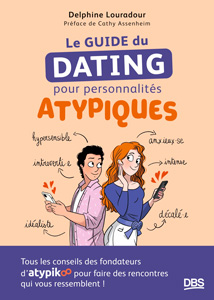
This is exactly why communities like Atypikoo exist: to offer spaces where neurodivergent people can meet, connect, and build relationships — friendships or romances — in complete authenticity, without having to mask who they truly are.
In conclusion
Neurodivergent people don't have an "abnormal" sexuality — they simply have another grammar of connection. They remind us that sexuality isn't reducible to gestures or words, but is an intimate, singular, sometimes silent language.
What if we listened a bit more to these out-of-norm voices? They might have much to teach us about free, sincere, and authentic love.
? How do you experience your sexuality and relationships as a neurodivergent person? Join the conversation and share your experience with a community that understands you.