

If you are neurodivergent and dating in the UK, you have probably done the maths: mainstream apps optimise for fast swipes, loud profiles and small talk — three things that drain most autistic and ADHD brains. The good news is that a real ecosystem of alternatives now exists, from dedicated neurodivergent platforms to disability-inclusive UK services. The bad news is that they are not interchangeable. Here is how to choose, without the marketing gloss.
What « neurodivergent-friendly » actually means
Before comparing names, agree on criteria. An app genuinely works for neurodivergent users when it offers:
- Depth over volume — profiles and matching built around how you think and what you love, not just photos and a one-liner;
- Clear interaction rules — structured prompts and explicit expectations beat « hey » into the void; ambiguity is the tax neurodivergent users pay everywhere else;
- A community that self-identifies — you should not have to disclose and explain masking, stimming or sensory needs on every single match;
- Offline options with a known format — events where you know the venue, the schedule and the exit plan;
- Honest moderation — neurodivergent users are disproportionately targeted by romance scammers, who actively seek out openness and literal communication styles.
The options UK singles actually use
Dedicated neurodivergent platforms
Atypikoo flips the mainstream default: everyone on the platform already knows what masking, hyperfocus and sensory overload mean, because the network was built by and for neurodivergent, gifted and highly sensitive adults. Three things distinguish it in practice. First, profiles are structured around traits, interests and ways of functioning rather than appearance-first swiping. Second, it deliberately mixes dating with friendship and group meetups — which matters enormously if romantic pressure is precisely what you want less of; many members arrive for the events and let connections happen sideways. Third, it grew out of a real community (born in France in 2019, tens of thousands of members joined since, thousands of real-world meetups organised) rather than a venture-funded growth experiment. English-speaking members are welcome, and the self-assessments and magazine are fully available in English.
Autism-focused international apps
Several English-language apps position themselves specifically around autism and neurodivergence — Hiki being the best known. They get the philosophy right (identity-first, community-minded) and can work well; the practical caveat for UK users is user-base geography: historically concentrated in North America, which on a dating app translates directly into how many active people you'll find within fifty miles. Always test the actual density in your area during a free period before paying.
UK disability-inclusive dating services
The UK has long-running learning disability and disability dating services, often charity-adjacent, with real safeguarding cultures. They are inclusive by design and moderation tends to be human and careful. Two honest caveats: their scope is usually broader than neurodivergence (so the shared-experience density varies), and user bases skew smaller and older. For some people that's exactly right; for others it's a poor fit. Check who operates the service and how profiles are verified before subscribing.
Mainstream apps with a neurodivergent strategy
Plenty of neurodivergent Brits still meet on the big apps — and it can work if you treat it as a filtering exercise. State your neurotype or your communication style in the first line (« autistic, literal, allergic to small talk — ask me about my current obsession »), use interest filters aggressively, and treat the inevitable explaining as a cost you've chosen. Budget your energy accordingly: the explaining tax is real, and it compounds. Our piece on whether dating apps' time has passed digs into why the mainstream model wears people down.
Free vs paid: what's worth money
Most platforms in this space run freemium models: browsing and limited contact free, unlimited messaging or visibility boosts paid. A sensible rule for neurodivergent users: never pay to increase volume (more swipes, more likes — that's the mainstream logic that exhausts you); only pay to increase depth or access (better filters, events, seeing who actually shares your traits). And before any subscription, check the density question: the best feature set in the world is worthless with three active users in Manchester.
Safety notes that matter more for us
Whatever you choose: video-call before meeting; keep first dates public, daytime and time-boxed; tell someone where you are; and treat any fast declaration of love followed by a money story — investment tips, customs fees, a sudden crisis — as the scam it is, every single time. Scammers specifically exploit direct communication styles and the relief of finally feeling understood. Our guide to the worst dating advice covers the manipulative patterns to ignore, including the « play hard to get » nonsense that gaslights literal communicators.
Beyond apps: the meetup route
An honest UK comparison has to say it: for many autistic and ADHD adults, the highest-success channel isn't an app at all — it's the structured event. A quiz night with assigned teams, a board-game café session, a themed walk: known venue, known format, built-in conversation material and a socially legitimate exit time. Every variable that makes a first date terrifying is pre-solved by the format, and connection gets to happen sideways, while your attention is on the activity rather than on performing.
This is why platforms that organise real-world meetups hold a structural advantage for our community over pure swipe apps — it's a founding principle of Atypikoo's model (thousands of meetups organised since 2019), and the logic applies to any local neurodivergent social group you can find. If apps drain you, invert the funnel: meet in structured groups first, let the app be where you continue conversations with people you've already met.
How to evaluate any app in seven days (without paying)
- Day 1 — the density test. Set your real distance radius and count genuinely active profiles (logged in recently, more than two photos, actual text). Under a few dozen: the maths won't work, whatever the features.
- Days 2-3 — the quality test. Read twenty profiles. Do people describe how they think and what they love, or is it one-liners and gym mirrors? Profile depth predicts conversation depth.
- Days 4-5 — the interaction test. Send three genuine, specific openers. Measure replies and their quality. One real conversation beats thirty matches.
- Day 6 — the safety test. Report-and-block flow easy to find? Verification options? Search the app's name + « scam » and read what users report.
- Day 7 — the energy audit. The only metric that matters long-term: after a week, does opening the app feel like possibility or like homework? Your nervous system's verdict is data — trust it over the feature list.
What it costs: a realistic budget view
UK pricing across this market clusters into predictable bands. Mainstream apps run freemium with premium tiers typically in the £10-35/month range depending on tier and commitment; niche neurodivergent apps tend to sit lower, with smaller communities to fund; specialist disability services often use old-school monthly memberships. Three budgeting principles serve neurodivergent users specifically: pay monthly rather than annually until an app has passed your seven-day evaluation (sunk-cost pressure is real and ADHD brains feel it doubly); count the energy cost alongside the money (a cheap app that burns you out on explaining is expensive); and remember the alternative spend — the price of one premium month equals a couple of structured meetup events, which for many autistic daters convert dramatically better per pound.
Age and stage: who you'll actually meet
A practical note nobody puts on the landing page: neurodivergent platforms skew heavily towards the late-diagnosis generation — thirties through fifties — because that's who is actively processing a new identity and seeking community around it. Mainstream apps skew younger. If you're 40+ and neurodivergent, the specialist route is doubly your friend: better understanding and better age-matching. If you're in your twenties, expect to find your peers split across both worlds, and let local density decide.
Frequently asked questions
Are there completely free neurodivergent dating apps in the UK?
Every serious platform has a free tier you can genuinely use to evaluate fit and local density. Fully free services exist but tend to under-invest in the thing you most need: moderation. A small paid tier is often the price of a scam-resistant space.
Do I have to disclose my diagnosis on these apps?
No — and on neurodivergent-first platforms, that's the point: the context discloses for you. You describe how you function, not your medical file. Self-identified members are welcome at Atypikoo; no paperwork required, and our free self-assessment is an orientation tool, not a gate.
What if I want friends rather than dates?
Then pick a platform where friendship is a first-class mode rather than a consolation prize — it changes the entire social pressure. This is one of Atypikoo's founding choices, and our guide to making friends when you're neurodivergent goes deeper.
Keep reading
- Full neurodivergent dating apps comparison
- Dating for autistic people: a complete guide
- The neurodivergent dating guide
Curious whether a specialist community fits you? See how Atypikoo works — or start with the free atypical profile self-assessment.



palmarès Capital 2026
Atypikoo se classe 3e du palmarès Capital × Statista 2026, dans la catégorie Rencontres & réseaux sociaux spécialisés.
Learn morerejoignez la communauté
Découvrez notre livre
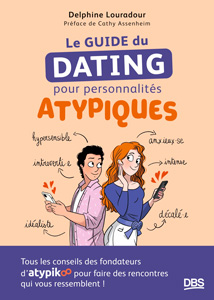
Discover the first practical guide from Atypikoo's founders for romantic meet-ups that truly respect who you are.
Discover our bookTest 16 personalities
This free self-assessment test maps out how you function based on 16 personality types frequently found among atypical profiles.
0 comments on The Best Neurodivergent & Autism-Friendly Dating Apps in the UK (2026)